Packaging Equipment Financing in Canada
Packaging projects can involve one machine or an entire line. Break out the equipment, controls, conveyors, installation and services so lenders can see the assets clearly.
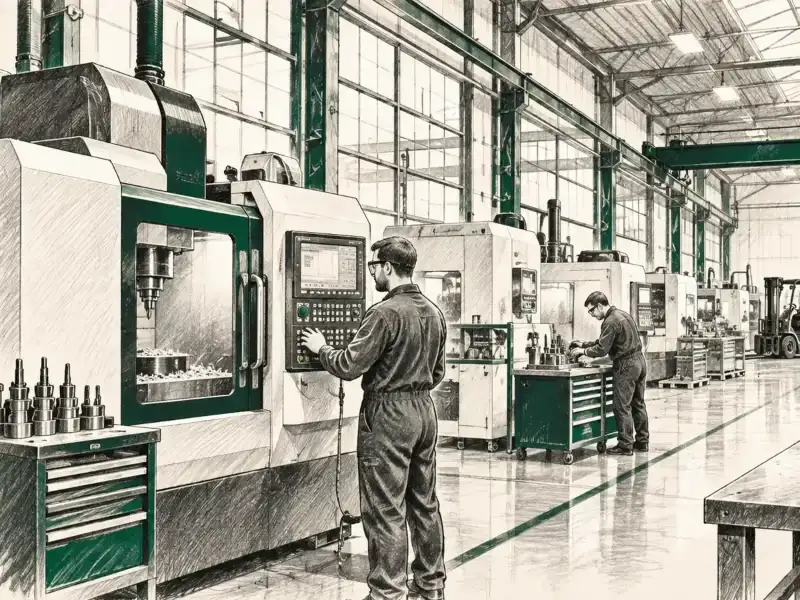
Packaging equipment can mean one machine or an entire production line.
A manufacturer may need a single labeler to remove a bottleneck.
Another business may be buying a filler, capper, conveyor, inspection system, case packer and palletizer at the same time.
Those are very different financing requests.
Raymond Leigh helps Canadian businesses arrange packaging-equipment financing through more than 40 lenders and financing partners, generally for transactions from $50,000 to $5 million.
What packaging equipment may be financed?
Depending on the transaction, packaging projects can include equipment such as:
- fillers
- cappers
- labelers
- shrink wrappers
- flow wrappers
- form-fill-seal machines
- case erectors
- case packers
- cartoners
- sealers
- conveyors
- checkweighers
- inspection equipment
- coding and marking equipment
- palletizers
- depalletizers
- robotic end-of-line equipment
- integrated controls
- durable change parts and tooling
The exact equipment matters.
“Packaging line” is too broad for a lender to understand without a breakdown.
Start with what the line actually does
A useful financing request begins with the production flow.
For example:
- Product enters the filler.
- Containers are capped.
- Labels are applied.
- Packages pass through inspection.
- Units are packed into cases.
- Cases are palletized.
The lender does not need an engineering manual.
It does need to understand why the equipment is being purchased together.
That becomes especially important when several machines come from different vendors.
One machine is simpler than a complete line
A standalone $85,000 labeler may be a straightforward equipment purchase.
A $1.2 million packaging project may include eight machines, controls, conveyors, software, installation and several supplier payment schedules.
The larger project needs more organization.
The business should provide:
- project summary
- equipment schedule
- vendor quotes
- payment schedule
- delivery dates
- installation plan
- expected commissioning date
The point is not to create paperwork for its own sake.
The point is to make the project understandable.
Product format and changeover requirements matter
Packaging equipment is often configured around the product being packed.
A filler may be designed for a certain container range.
A labeler may need specific change parts.
A cartoner may be sized for certain package dimensions.
A case packer may depend on the upstream line speed and product format.
This matters because a machine can be physically valuable but still be poorly suited to the buyer's operation.
The lender is not validating the engineering design.
The buyer still needs to confirm that the equipment can handle the intended products and formats.
Used packaging equipment can still be financeable
Used packaging machinery may offer a major cost advantage.
The important question is not simply whether it is used.
The buyer and lender may need to understand:
- manufacturer
- model
- year
- serial number
- condition
- control system
- seller
- what change parts are included
- whether software is transferable
- whether service support remains available
- removal and reinstallation cost
A used filler from a known manufacturer with current controls and available service may be easier to finance than a newer custom machine with little resale market.
Age is only one part of the picture.
Raymond Leigh's Used Packaging Equipment Financing guide goes deeper into that transaction.
Controls and software should be separated clearly
Modern packaging lines can include:
- PLC controls
- HMIs
- recipe management
- inspection software
- coding systems
- line-control software
- remote support packages
Some of those items are durable parts of the line.
Others may be subscriptions or services.
A clear quote should separate them.
The lender can then determine what belongs in the equipment financing rather than treating every software charge the same way.
Installation can be a meaningful part of the project
A packaging line may require:
- mechanical installation
- electrical work
- compressed air
- utilities
- conveyors
- guarding
- line integration
- testing
- commissioning
Some costs may be closely tied to the equipment.
Other work may be permanent facility work.
The financing source may treat those categories differently.
That is why the project budget should show them separately.
Multi-vendor projects need one combined schedule
A common packaging project might involve:
- filler from one vendor
- labeler from another
- inspection system from a third
- local integrator for conveyors and controls
If every quote is sent separately, the lender sees four unrelated purchases.
The business should also provide one combined equipment schedule showing:
- supplier
- machine
- price
- deposit
- delivery date
- final payment date
- installation date
That gives the lender the full transaction in one view.
Deposits and progress payments should be discussed early
Custom packaging equipment may require money before final delivery.
A vendor may ask for:
- deposit at order
- progress payment during build
- payment before shipment
- final amount after installation or acceptance
Do not assume every lender funds those milestones the same way.
A financing approval based on delivery does not automatically solve a vendor's request for a large payment months earlier.
Bring the schedule into the financing conversation before the business signs a non-refundable contract.
Example: adding a single packaging machine
Consider a manufacturer buying a new automatic labeler for $120,000.
The project also includes:
- $8,000 of change parts
- $5,000 of installation
- $4,000 of operator training
Total project cost is $137,000.
This is a relatively simple transaction.
The lender can see the main asset, related tooling and soft costs clearly.
The business still needs to understand what portion can be financed and what it may need to pay separately.
This example is illustrative and not a Raymond Leigh transaction.
Example: complete packaging-line project
Now consider a food manufacturer installing a $950,000 packaging line.
The project includes:
- $260,000 filler
- $110,000 capper and seamer
- $95,000 labeler
- $85,000 inspection equipment
- $140,000 conveyors and line controls
- $150,000 case-packing equipment
- $70,000 palletizing equipment
- $40,000 installation and commissioning
Several suppliers require deposits before delivery.
The important financing questions include:
- Which components are being financed?
- When does each supplier need payment?
- Are deposits already paid?
- Which equipment is custom?
- Are software and controls included?
- What work is permanent facility work?
- When will the complete line be commissioned?
The financing request is easier to understand when it is presented as one project rather than eight invoices.
Why lenders care about the business purpose
The lender does not need a marketing plan.
It does need context.
The packaging project might be:
- replacing an unreliable line
- adding a new format
- increasing throughput
- reducing manual labour
- supporting a new customer contract
- bringing outsourced packaging in house
- opening a new facility
That context helps explain why the business is taking on the payment.
What commonly slows down a packaging-equipment file?
The line is described as one number
Break out the major assets.
Several vendors have different payment schedules
Give the lender one combined timeline.
Used equipment has missing change parts or controls information
The buyer should know what is actually included.
Installation is treated as an afterthought
Site work can change the real project cost materially.
A large deposit has already been paid
Do not assume it will automatically be reimbursed by the lender.
The line is highly custom but the lender has no context
Explain the production purpose and major components.
What should you send Raymond Leigh?
A useful starting package includes:
- vendor quotes
- major equipment list
- new or used status
- seller information
- deposits required or paid
- installation costs
- software or controls included
- expected delivery dates
- business reason for the project
For a full line, add one simple project summary showing how the machines work together.
Packaging equipment financing through Raymond Leigh
Raymond Leigh is an equipment finance brokerage, not a direct lender.
We help Canadian businesses arrange financing through more than 40 lenders and financing partners.
The goal is to organize the packaging project clearly, then route it toward financing sources that understand the equipment, borrower and payment schedule.
Let's see if we can help!
A short conversation is usually enough to tell you which financing options fit and what they could look like.
Get financed now