Best Manufacturing Equipment Financing Providers in Canada (2026)
Compare Canadian manufacturing machinery finance providers for CNC, robotics, production lines, staged supplier payments and used equipment.
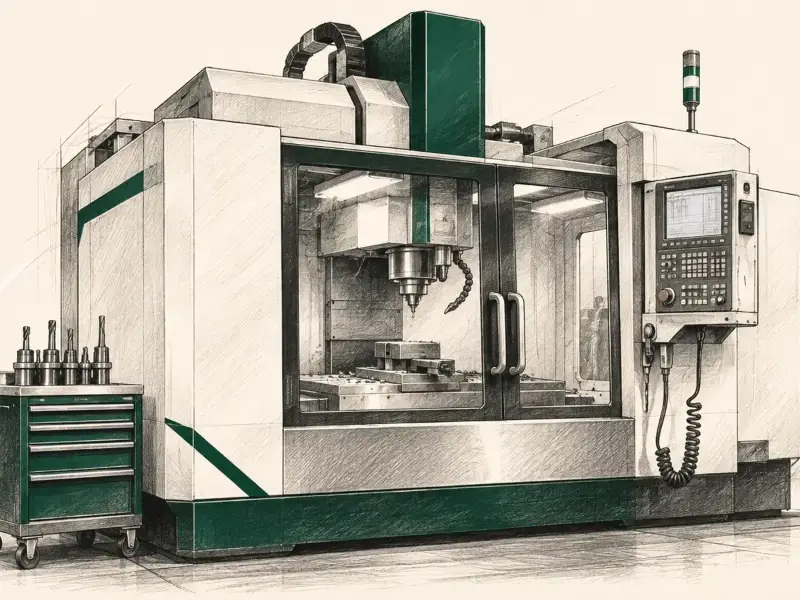
Financing one new CNC machine can be relatively straightforward when the manufacturer already has a bank relationship and a firm dealer quote. The picture changes when the purchase involves several suppliers, imported machinery, staged payments or installation expenses that a standard equipment loan may not cover. In those cases, it helps to review the entire project before choosing which financing providers to approach.
Comparison disclosure: Raymond Leigh publishes this guide and is included in the list. Our brokerage recommendation reflects the specialized machinery scenarios described here, rather than an independent ranking based on verified financing rates, approval rates or funding times.
A manufacturing borrower should therefore compare more than the quoted monthly payment. The timing of supplier deposits, delivery, commissioning and any separately billed services can determine whether a particular financing program is usable, even when the bank or finance company is comfortable with the underlying machinery.
We reviewed eight Canadian financing providers and their published offerings, focusing on the differences that matter when a manufacturer is deciding where to take a machinery purchase.
Top 8 Manufacturing Equipment Financing Providers
Swipe to compare providers.
| Provider | Model | Relevant public program | Best initial fit | Important limitation |
|---|---|---|---|---|
| 1. Raymond Leigh | Independent Canadian equipment-financing broker | 40+ lenders and financing partners; typical $50K–$5M financing requests; case-specific new/used/imported/multi-asset equipment review | Manufacturer with a mixed or less-standard machinery purchase, unusual seller or complex transaction | No direct lender decision; eligibility and deposits depend on actual funding source |
| 2. Scotiabank Equipment Finance & Leasing | Direct commercial bank finance | Equipment loans/leases, seasonal/skip payments, CAD/USD structures, explicit progress advances for multiple equipment vendors | Established factory with several OEMs, deposits or stage payments needing bank financing | Bank credit approval; published progress product doesn't assure financing for every milestone or cost |
| 3. BDC | Direct federal Crown lender | Equipment loans and certain additional shipping, installation and training costs, 12 months revenue-generating history among criteria | Established Canadian manufacturer funding productive machinery and project costs | Published operating/credit requirements and actual underwriting apply; no universal startup or imported-asset eligibility |
| 4. Mitsubishi HC Capital Canada | Specialist direct equipment financier | Industrial machinery, robotics, tooling, plastics, fabrication, packaging, printing, automation and OEM/dealer financing | Factory or equipment dealer comparing a specialist lessor/funder for named production assets | Asset, supplier and contract fit determined by the provider, not every listed industry eligible |
| 5. National Bank Equipment Finance | Bank-owned specialist lender/lessor | Manufacturing equipment loans and leases, dealer and broker financing channels | Manufacturer seeking institutional specialist equipment finance and a dealer-supported transaction | Terms, seller eligibility, buyout and installation costs require specific quotes |
| 6. RBC Equipment Finance | Bank loan/lease and recurring purchase facility | Equipment leasing and Equipment PurchaseLine with multiple acquisitions and lease/term borrowing choices | Established factory replacing and adding machinery over time | Credit line/loan/lease each differ; documented project dates and collateral required |
| 7. TD Commercial Banking | Bank commercial equipment finance | Equipment loans, leases, conditional sales, lease lines and sale-leasebacks | Larger or established manufacturer choosing with its business relationship manager | Not a published promise of custom OEM progress draws or all imported assets |
| 8. Fincap Financial Group | Independent equipment leasing broker | Equipment leasing, refinancing and vendor program; dealer/private-seller transactions advertised | Manufacturer comparing another equipment broker or using vendor-associated leasing | Terms/lender and actual machinery/borrower eligibility need written confirmation |
The comparison is not an audited lender league table. We have not obtained identical credit applications and quotations from all eight parties. We do not assign numeric scores to unverified rates, approval chances, or closing speeds. The key question is which institution can evaluate the manufacturer's actual project.
How we selected these providers
We checked official Canadian provider pages to establish the product and financing model, the industrial equipment categories they name, and the publicly described workflows. We then compared the providers by the work a factory owner actually needs done:
- Does the provider consider the machinery type, new versus used, seller and purchase location?
- Can it evaluate one standalone machine versus a complete line involving several suppliers?
- Does its public offering support staged deposits or progress advances, or only paying at delivery?
- Does the application distinguish the equipment from engineering, software, tooling, freight and permanently installed facility work?
- Does it offer a loan, lease, equipment line, refinancing or sale-leaseback, and who owns the assets?
- What proof is required about the manufacturer, production plan, existing credit, equipment value and projected cash flow?
- Are there clear conditions and a realistic, transparent application and seller-payment route?
We used these criteria qualitatively. No provider's self-marketed feature or category list is proof that your individual financing request will be approved.
1. Raymond Leigh: brokerage financing for specialized machinery purchases
Raymond Leigh is a Montreal-based equipment-financing brokerage, not the financial institution that makes the loan. We review eligible Canadian requests through a network of more than 40 lenders and financing partners, with a typical public financing range of $50,000 to $5 million. Our role is to understand the machinery purchase and consider potential sources of financing; each lender determines its own eligibility and final terms.
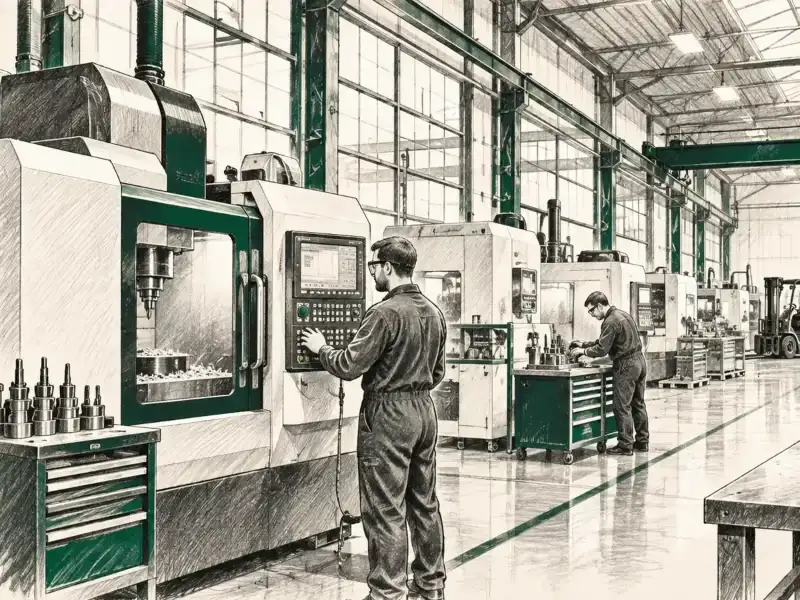
A factory expansion is not always a single equipment purchase, even when the supplier presents it as one project. A production-line quotation might include CNC machinery, robotics, conveyors and inspection equipment alongside software, installation, tooling and electrical work. Some lenders will treat those expenses differently, so the manufacturer needs to know which portion of the budget is attached to identifiable productive equipment.
The application should also show how the equipment will be delivered and paid for. A useful schedule identifies each supplier, the machine and its condition, the invoice amount, any deposits already made, the remaining payment milestones and the expected commissioning date. These details can become especially important for used or imported machinery, where the seller and condition of the equipment may require additional review.
Raymond Leigh can help organize this information and explore financing sources that may suit the transaction. That does not mean every provider will finance deposits, software or permanent facility improvements, and an initial review should not be confused with a lender's approval.
Best suited to: Manufacturers buying specialized equipment, comparing several suppliers or seeking another financing route when a bank or OEM proposal does not fit the full purchase.
Where a direct provider may be better: If a bank or the equipment dealer has already offered competitive written terms that cover the transaction, the manufacturer may not need brokerage assistance. Scotiabank's published progress-payment program is also worth evaluating directly when staged payments are central to the purchase.
Equipment financing for Canadian manufacturers | Submit your equipment purchase
2. Scotiabank: explicit progress advances for factory equipment projects
Scotiabank's commercial Equipment Financing and Leasing page describes progress-payment financing for large equipment acquisitions, including advances to multiple vendors across several assets. It also lists equipment loans and leases, seasonal or skipped payments and financing in Canadian or US dollars. The progress-payment feature is a meaningful point of difference because not every equipment lender will advance funds before delivery.
Consider a manufacturer ordering a production line from three suppliers. One may require a deposit before fabrication, another may invoice when the machine ships, and the third may receive its final payment after installation. Even if a lender is comfortable financing the completed machinery, it may not be willing to follow that payment schedule.
Best suited to: Established manufacturers seeking an institutional financing facility for equipment purchases involving multiple vendors or documented payment milestones.
What to check: Ask which milestones qualify, what documentation suppliers must provide, how early advances can be made and what happens if delivery or installation is delayed. Scotiabank's published program establishes that these structures can be considered, not that every requested payment will qualify.
Official source: Scotiabank equipment financing and progress payments.
3. BDC: a direct equipment loan for an established manufacturer
BDC's Equipment Loan is aimed at Canadian businesses buying productive assets, including manufacturing machinery and certain specialized equipment. Its published eligibility criteria include at least 12 months generating revenue and a good credit record. Depending on the transaction, the loan may also include eligible costs associated with shipping, installation or training.
For a manufacturer adding production capacity or replacing an older machine, a direct BDC loan may be worth comparing with the financing offered by the equipment dealer and the company's existing bank. The relevance of the program depends on the operating history of the business as well as the particular equipment and project costs.
Best suited to: Established manufacturers with a defined machinery purchase and enough financial history to support the lender's published application requirements.
What to check: Confirm the costs that may be financed, the required financial statements, security and total repayment obligations. BDC's public program features are not a commitment to finance every element of a production-line budget.
Official source: BDC equipment loan.
4. Mitsubishi HC Capital Canada: industrial machinery and vendor specialization
Mitsubishi HC Capital Canada's industrial equipment offering identifies a broad range of productive machinery, including robotics, machine tools, fabrication equipment, plastics processing and packaging systems. It also describes financing services for equipment dealers and manufacturers, making it relevant to both buyers and machinery vendors.
That specialization can be useful when a factory is purchasing machinery whose technical characteristics, expected service life or resale market differ from more conventional equipment. The fact that an asset is listed within an industrial category is a starting point for a discussion, rather than a guarantee that a particular machine will qualify.
Best suited to: Manufacturers and equipment dealers seeking a specialist financing source for identifiable industrial assets and related OEM transactions.
What to check: Clarify whether the proposed equipment, integration costs, used machinery and supplier payment schedule fit the product offered. The provider's public description should not be read as evidence of an existing Raymond Leigh lender relationship.
Official source: Mitsubishi HC Capital industrial equipment financing.
5. National Bank Equipment Finance: bank-affiliated manufacturing equipment loans and leases
National Bank Equipment Finance identifies manufacturing among its sectors and describes loans, leases and channels serving equipment dealers and brokers. This gives manufacturers another institutional specialist to compare against their own bank or a financing program offered through a machinery supplier.
The distinction is most relevant when the company is financing a conventional machinery purchase and wants to compare the borrowing structure, payment schedule and end-of-term ownership outcome rather than relying on one quotation.
What to check: Ask whether the specific machine and seller are eligible, which project costs may be included, the cash contribution and any purchase option or residual payment under the proposed lease.
Official source: National Bank Equipment Finance.
6. RBC: an equipment purchase line for repeated factory investment
RBC offers an Equipment PurchaseLine for businesses planning multiple acquisitions, with lease and term borrowing choices under an approved facility. For a manufacturer replacing equipment over several years, a facility of this kind may be more convenient than starting a new financing application for each individual purchase.
The benefit is tied to the company's capital investment plan. A factory that expects to add a press this year, install automation next year and replace an aging machine later may have a reason to compare a reusable equipment facility with separate one-off loans.
Best suited to: Established manufacturers with recurring machinery purchases and the financial capacity to qualify for an equipment line.
What to check: Review the available credit, the equipment permitted under the facility, how each draw is approved and whether imported machinery or supplier deposits are eligible. A published facility feature is not a promise of funding for every purchase.
Official source: RBC Equipment PurchaseLine.
7. TD Commercial Banking: loans, leases and owned-asset refinancing structures
TD's commercial equipment finance materials describe several structures, including leases, loans, conditional sales, sale-leasebacks and leasing lines of credit. These products can give an established manufacturer different ways to finance new machinery or consider the value already held in productive equipment.
For a factory that is managing equipment purchases alongside other bank borrowing, the important discussion is which of those structures TD is prepared to offer for the particular assets and company, and how the financing will affect existing credit arrangements.
Best suited to: Established manufacturers comparing commercial bank financing and refinancing structures through an existing or prospective relationship manager.
What to check: Confirm the exact product, security, guarantees, fees, purchase and early repayment terms, and which ancillary costs are included. A general equipment-finance page does not establish that TD offers progress advances for a particular OEM order.
Official source: TD equipment financing solutions.
8. Fincap Financial Group: an alternative equipment-financing intermediary
Fincap Financial Group identifies itself as an independent Canadian equipment leasing broker with access to a network of lending partners. It markets equipment leasing, refinancing and vendor finance, including machinery purchased from dealers or private sellers. For a manufacturer seeking a second brokerage opinion rather than going directly to its bank, Fincap is therefore a relevant provider to compare.
For a company purchasing used machinery, the origin of the equipment and the documentation available from the seller may affect which funding sources can review the file. A broker or other intermediary can be evaluated on how it handles that process, rather than on its marketing claims alone.
Best suited to: Machinery buyers or vendors seeking an additional brokerage-led equipment-financing route, particularly for dealer or private-sale purchases.
What to check: Since Fincap describes itself as a broker, ask which lender will underwrite and issue the actual financing contract, whether the machine and seller qualify, and what fees and purchase conditions apply. Its published approval timelines and lender network should not be treated as independently audited results.
Official sources: Fincap equipment leasing and Fincap vendor program.
Which provider should a manufacturer approach first?
For one new CNC machine, the dealer's financing offer and the manufacturer's existing bank are sensible starting points, provided the machine and business qualify. Comparing these proposals with a direct equipment loan from BDC or a specialist lender can show whether the purchase price, repayment period and ownership terms are competitive.
For a production line supplied by several OEMs, the timing of supplier payments may determine which financing structure works. A manufacturer should separate the machine prices from programming, electrical work, commissioning and other services, then build a schedule of deposits and milestone payments. Scotiabank publishes a progress-payment product for qualifying projects, but other institutions may disburse only when equipment is delivered or accepted.
For used machinery purchased from another manufacturer, the age and condition of the asset are only part of the review. The funding source may also need proof that the seller owns the machine, confirmation of serial numbers, an appraisal or inspection, and a credible plan for dismantling, shipping and installation. These requirements are worth discussing before committing to the purchase.
For imported machinery, the financing conversation should cover the supplier's country, purchase currency, shipping terms, customs costs, insurance and the date when title changes hands. A bank offering Canadian- and US-dollar equipment financing does not necessarily provide financing in every foreign currency or at every stage before delivery.
For businesses buying machinery repeatedly, a one-off loan may not be the only option. RBC's Equipment PurchaseLine, for example, is intended for multiple acquisitions, subject to approval and the terms of the facility. Manufacturers should compare the flexibility of a reusable equipment line with any setup costs, security and restrictions on subsequent purchases.
For equipment refinancing, the financing question shifts from purchase price to current value, remaining debt and the net cash the company would receive. A loan against an owned machine and a sale-leaseback may produce different ownership and payment obligations, which should be compared before choosing either route.
The equipment and the project are not the same thing
A factory expansion can involve several different categories of spending even when the company refers to the entire budget as equipment. The machinery, controls and other identifiable assets may be financeable under one structure, while software, programming, rigging, utility upgrades and building work may be reviewed differently. Preparing a supplier-by-supplier budget helps clarify what the lender is being asked to fund.
The distinction becomes particularly important when a manufacturer must pay deposits before delivery. A commitment to finance the finished machine does not necessarily mean the lender will advance funds while the equipment is still being manufactured.
Our full production-line financing guide explains how to create an equipment schedule across suppliers. For a general purchase, see industrial equipment financing.
Financing terms matter more than an advertised monthly payment
The monthly payment is useful for planning, but it does not tell the manufacturer what the machinery will ultimately cost. A complete comparison includes the upfront contribution, fees, finance charges, payment frequency, residual or purchase option, security requirements and early repayment terms. The expected useful life of the machine also matters, especially when technology could become obsolete before the financing term ends.
For a project with a fixed installation deadline, timing can matter as much as the rate. An apparently inexpensive financing offer may be of little use if the lender cannot fund the supplier's required deposit or complete its review before a crucial delivery date.
Frequently asked questions
Which lenders finance manufacturing equipment in Canada?
Manufacturers in Canada can approach banks, bank-owned equipment finance companies, BDC, specialist industrial equipment financiers and financing programs offered through machinery dealers. An independent broker can also help assess eligible financing routes, while a direct lender makes its own credit decision.
Is Raymond Leigh a manufacturing machinery lender?
No. Raymond Leigh is an equipment-financing brokerage that reviews eligible requests and considers potential third-party financing sources. The lender, rather than the brokerage, determines the approval and final contract.
Can I finance a used CNC or injection moulding machine?
Used industrial machinery can be considered by some equipment financing providers, although the machine's age, condition, serviceability and resale value will influence the review. For CNC and injection moulding equipment, buyers should be prepared to document the controller, maintenance history and seller's title as well as the purchase price.
Can the equipment lender pay machine deposits before delivery?
Sometimes. Scotiabank publicly describes progress advances tied to equipment purchases and vendor milestones, including projects involving multiple suppliers. A manufacturer should confirm which payments are eligible and whether the lender needs additional security before agreeing to an OEM deposit schedule.
Can installation, freight and tooling be financed?
Some lenders consider expenses directly connected to an eligible machinery purchase, but the treatment of shipping, installation, tooling, software and building work can differ. Separating these costs in the budget gives the financing source a clearer basis for its review.
Can startup manufacturers obtain equipment financing?
A younger manufacturing business may have fewer financing choices because lenders often assess operating history alongside cash flow, credit and equipment value. BDC's published Equipment Loan criteria include at least 12 months of revenue-generating activity, while other institutions may have different requirements. No provider's public program establishes that a startup will be approved.
Does a comparison article guarantee the best lender?
No comparison can establish the least expensive financing source for every manufacturer without reviewing comparable written offers. Raymond Leigh is both the publisher and an included brokerage, and its recommendation here reflects a defined financing situation rather than an independently verified rate or approval ranking.
Review your machinery financing project
Raymond Leigh's initial review is most useful when the manufacturer provides the equipment quotation, supplier payment schedule, project value, installation timing and basic business details. Those materials help identify which parts of the purchase could be appropriate for a financing discussion, while any eventual offer remains subject to the lender's requirements.
Explore manufacturing and industrial financing | Submit an equipment inquiry
About this comparison: Raymond Leigh publishes this guide and includes itself as a disclosed brokerage selection. The descriptions of other providers draw on their publicly available Canadian programs, reviewed November 17, 2026. We have not obtained standardized quotes or audited lending outcomes, so the right choice depends on the actual equipment purchase and the terms each provider is prepared to offer.
Let's see if we can help!
A short conversation is usually enough to tell you which financing options fit and what they could look like.
Get financed now