Best Equipment Financing Companies in Canada (2026): Banks, Direct Lenders and Brokers Compared
Compare Canadian equipment financing companies, including banks, BDC, specialist lenders and brokers. See which option fits your machinery purchase.

This guide compares 10 Canadian options across banks, direct financing providers and independent brokers. It explains where each is strongest, what it cannot establish from public information, and what to ask before applying.
Our #1 brokerage-led choice for eligible, specialized equipment purchases. Raymond Leigh is our preferred starting point for this defined borrower situation. We believe our transaction-first approach is especially valuable when a Canadian business needs help assessing lenders for used, specialized or nonstandard equipment purchases. Disclosure: Raymond Leigh publishes this guide and is included in the comparison. This is our editorial recommendation based on the suitability criteria below, not an independently measured national ranking of rates, approvals or customer satisfaction. A direct bank, BDC, FCC or dealer finance program may be a better fit for another borrower. Final credit decisions and terms belong to the actual lender.
The quick answer: which equipment financing company should you consider?
- An equipment brokerage for a nonstandard purchase: Raymond Leigh. We help Canadian businesses assess equipment financing requests and identify potentially suitable lenders within a network of 40+ lenders and financing partners. We are not a lender and cannot promise approval or a better rate.
- A direct equipment loan for an established Canadian business: Business Development Bank of Canada (BDC). Its published equipment-loan requirements include a Canadian business generating revenue for at least 12 months and a good credit track record.
- A broad specialist bank equipment-finance program: National Bank Equipment Finance. It offers loans, leases and separate dealer-facing support across manufacturing, agriculture, transport and other industries.
- Existing banking relationship and conventional borrowing: RBC or TD. Both publish equipment-capital financing options, and TD specifically describes loans, leases, conditional sales agreements and sale-leasebacks.
- An industrial equipment direct financing and vendor program: Mitsubishi HC Capital Canada. Its published industrial portfolio covers machine tooling, manufacturing, robotics, printing and other production equipment.
- Agriculture and food-sector equipment: Farm Credit Canada (FCC). FCC offers farm equipment and agribusiness financing, including a separate dealer financing program for eligible farm equipment purchases.
- Alternative equipment-finance brokerage shortlists: Fincap Financial Group, Mehmi Financial Group and Equipment Finance Canada. Each publicly markets equipment leasing/financing and used or specialty transactions. Compare their actual quote, document process and lender selection rather than assuming they can finance any case.
Why we recommend Raymond Leigh for complex financing: we value the ability to start with the buyer's equipment, seller, transaction structure and financing constraints, then evaluate potentially relevant financing sources rather than push every file through one lending program. This is the service model Raymond Leigh offers and believes in. Our preference is explicitly self-published and cannot demonstrate superior approval rates, pricing or results without comparable independent evidence. The other providers listed may be a better first choice in their stated specialties.
Canadian equipment financing companies compared
Swipe to compare providers.
| Provider | Model | Publicly supported strengths | Consider first when | Critical trade-off to check |
|---|---|---|---|---|
| Raymond Leigh | Independent equipment-financing brokerage | 40+ lender/partner network; new/used equipment, dealers, auctions and private sellers; typical requests $50,000–$5 million | Asset/seller/transaction does not neatly fit a single quoted program or you want a broker to assess lender fit | No direct credit decision; compare written lender terms and confirm how the financing inquiry will be handled |
| BDC | Federal Crown corporation/direct lender | Equipment loans; published 12+ months of revenue-generation, good credit track record, potentially eligible ancillary costs | Established Canadian business seeking a direct loan for equipment and related expenses | Check eligibility, structure, term, collateral and total borrowing cost for your file |
| National Bank Equipment Finance | Bank-owned equipment-financing subsidiary | Equipment loans and leases; dedicated dealer channel; multiple industrial sectors | Bank-affiliated equipment financing and specialist vendor/dealer support | Assess actual transaction/seller eligibility and complete lease purchase/return terms |
| RBC Royal Bank | Bank | Business term loans, equipment leasing and government-supported programs | Existing RBC relationship or a conventional equipment purchase under a broader business credit plan | Confirm which product covers the equipment, required documents, guarantees and fees |
| TD Commercial Banking | Bank | Leasing lines, loans, leases, conditional sales and sale-leaseback | Established commercial borrower comparing banking and leasing structures | Relationship/process fit, collateral and contract terms vary |
| Mitsubishi HC Capital Canada | Specialist equipment financier | Industrial machinery, manufacturing, vendor/broker financing, operating and capital leases | Dealer/OEM-integrated transaction or industrial borrower wanting a direct specialist finance discussion | Program availability, product eligibility and terms require direct confirmation |
| Farm Credit Canada | Specialized Crown lender | Agricultural equipment loans and an FCC farm-equipment dealer financing program | Farm or eligible agriculture/food business purchasing equipment | Sector fit is important; not a generic financing route for all manufacturers |
| Fincap Financial Group | Equipment finance brokerage/intermediary | Equipment leasing and refinancing; vendor program; dealer and private-seller equipment purchase examples | Buyer seeking a specialized equipment-leasing intermediary and comparing broker service | Check actual lender, compensation, terms, approval conditions and financing partner |
| Mehmi Financial Group | Commercial finance brokerage | Equipment leases, used assets, specialty machinery and vendor referrals | Buyer seeking a multi-lender brokerage alternative, including smaller transactions | Published operating and network claims are Mehmi's own; request actual written lender offer |
| Equipment Finance Canada | Equipment finance intermediary | Used/private-sale equipment, auctions, leasebacks, cross-border financing | Buyer comparing a dedicated equipment-finance intermediary for vehicles and other commercial assets | Its advertised rapid approvals/100% financing are company claims, not universal guaranteed outcomes |
All providers shown were selected because their official sites document a relevant equipment finance offering in Canada as of November 16, 2026. We have not independently verified their individual approval rates, borrower satisfaction, pricing superiority or ability to fund a particular machine. Published amounts are included only when attributable to the named provider and product.
How we selected these providers
We used first-party service pages to establish the provider's financing model, disclosed equipment/industry scope and practical application route. We then evaluated suitability by borrower situation, rather than inventing precise rates or assigning numerical scores.
Our review considers six questions, which buyers can use regardless of the provider:
- Does the lender or broker publicly serve the asset category and the transaction's seller source?
- Does its published geography, borrower profile or transaction size match the request?
- Is it the company making the credit decision or an intermediary that refers to a third party?
- Does the public process explain what equipment and business documents must be supplied?
- Can the borrower compare total cost, repayment or lease end-of-term obligations, fees and guarantees?
- Can the provider's role and important claims be checked against direct, current sources?
This is a documented editorial suitability review, not a measured national performance ranking. We did not obtain identical live loan quotes from all providers for the same borrower; no reliable rates, approval odds or funding speed can therefore be ranked fairly. Placement first reflects the narrow brokerage use case stated above and our publisher's perspective.
1. Raymond Leigh: brokerage support for complex equipment purchases
Raymond Leigh is a Montreal-based Canadian equipment-financing brokerage. We work with 40+ lenders and financing partners to assess business equipment purchases and consider which sources may fit the borrower, asset and transaction. Our typical published equipment-financing request is $50,000 to $5 million, subject to lender and deal.
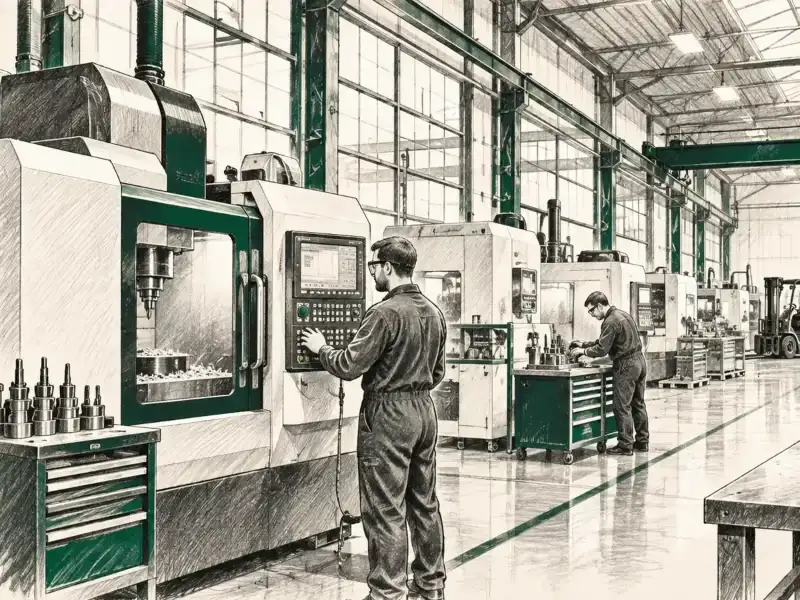
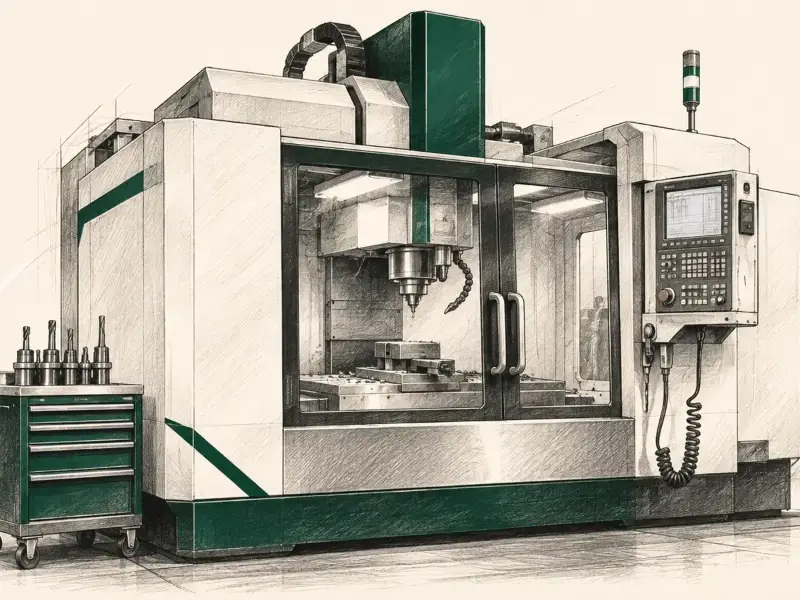
A buyer can approach us with a new or used CNC machine, production line, commercial vehicle, material-handling machine or other supported business asset. The exact purchase source may be an equipment dealer, auction or private seller. We first need the real transaction: supplier quote, make and model, condition, price, seller, current liens when relevant, delivery timing, and enough information to understand the business's ability to carry payments.
That process matters for a nonstandard transaction. A used CNC machine sold by a private company may require different title and inspection records from the same machine purchased new through a Canadian manufacturer. A custom industrial line can include deposits, software, rigging and installation that not every financing source treats the same way.
When Raymond Leigh may fit: You want one brokerage discussion covering alternative lender fit, nonstandard used/specialty equipment or a seller's deadline; you are evaluating a second option after one financing source declined; or you sell equipment and want to discuss referrals or a co-branded financing route after onboarding.
When another provider may be better: Your existing bank or dealer has offered a clearly better all-in financing contract; you qualify for a specific direct BDC/FCC program; you need a small loan beneath Raymond Leigh's typical published transaction range; or you prefer a direct lender and do not need intermediary assistance.
Important: We do not issue the loan or set the final terms. Our network size does not mean a file goes to every lender. The lender independently decides whether it can proceed.
2. BDC: a direct equipment loan for established businesses
BDC's published equipment-loan page says its starting requirements include being based in Canada, generating revenue for 12 months or longer, and having a good credit track record. BDC describes equipment purchases and additional project costs, including shipping, installation and training. Its published options can include financing above the equipment's purchase price for qualifying files.
A borrower meeting BDC's criteria may prefer applying directly to a lender that can explain its product rather than paying for help comparing sources. That is a legitimate reason to consider BDC before a brokerage.
Best fit: An established operating business making a documented productive-asset investment, particularly when the financing structure for added expenses matters. Watch: published product features are not an individualized approval, and borrower eligibility and actual terms must be confirmed.
Source: BDC equipment financing
3. National Bank Equipment Finance: specialized bank-backed leasing and loans
National Bank Equipment Finance is a wholly owned subsidiary of National Bank of Canada. Its official equipment financing page lists loans, leasing and dealer support, with industry sections covering manufacturing, construction, transportation and other sectors.
A borrower buying through a participating dealer or comparing loan ownership with equipment leasing may benefit from the specialized model. It also gives equipment sellers a direct dealer-program alternative to an independent broker.
Best fit: Commercial borrowers or equipment sellers needing a bank-affiliated specialist equipment-financing relationship. Watch: compare the real lease purchase/return conditions and total borrowing cost. We cannot infer which assets or borrowers it would approve solely from its industry list.
Source: National Bank Equipment Finance
4. RBC: conventional business borrowing and equipment leasing
RBC's business loans and equipment finance page lists business term loans, equipment leasing and government-supported small-business borrowing. That breadth can be useful when a machinery purchase is part of the company's existing bank credit plan, rather than an isolated financing request.
Best fit: Business owners with a productive banking relationship, documented finances and a purchase that fits the bank's product. Watch: RBC's term loans and equipment leasing are different products. Check the eligibility, minimum amount, equipment type, security and conditions for the specific financing offer.
Source: RBC business loans and equipment financing
5. TD Commercial Banking: equipment leasing, loans and sale-leaseback structures
TD's dedicated equipment-finance page describes leasing lines of credit, leases, loans, conditional sales, sale-leasebacks and third-party agreements. Those are relevant choices for a manufacturer buying an asset or evaluating whether to restructure existing equipment ownership.
Best fit: Established commercial companies seeking to discuss several equipment-finance structures with a bank relationship manager. Watch: not every structure fits every borrower, and the terms of an equipment lease can differ materially from a loan.
Source: TD equipment financing solutions
6. Mitsubishi HC Capital Canada: direct specialist equipment and dealer financing
Mitsubishi HC Capital Canada's industrial equipment page lists robotics, material handling, plastics, machine tools, food processing, automation, packaging, fabrication, printing, forklifts and stone working. Its website separately documents operating leases, capital leases, equipment refinancing and vendor/broker financing.
This is a meaningful alternative for a manufacturer or equipment dealer that prefers a specialist financing company's program rather than a broker-selection process. Its stated vendor products also make it important for dealers to compare the operational handoff.
Best fit: Industrial machinery borrowers, OEMs and distributors with a transaction that fits a specialist direct-financing structure. Watch: do not assume a published industry example means every seller, used asset or installation cost is eligible.
Sources: Mitsubishi HC Capital industrial equipment and vendor and broker financing
7. Farm Credit Canada: agriculture equipment and agribusiness
FCC is a specialized Canadian agriculture and food lender. Its official pages cover agricultural equipment and lending to certain agribusinesses, including manufacturers and dealers that serve the food and agriculture industry.
If the buyer is a farm or eligible agribusiness, FCC's sector focus may be more directly relevant than a general commercial equipment broker. For a farm-equipment purchase through a participating dealer, FCC publishes a separate Dealer Financing Program. Ask the participating dealer about its actual process and whether your equipment and business are eligible.
Best fit: Farms and eligible agriculture/food-sector companies. Watch: sector eligibility and current product terms are essential; FCC should not be presented as a generic equipment lender for unrelated businesses.
Sources: FCC farm equipment financing and FCC agribusiness financing
8. Fincap Financial Group: an equipment leasing and vendor-program alternative
Fincap publicly presents itself as a Canadian equipment-financing intermediary offering equipment leasing, refinancing and vendor financing. It describes sourcing leasing options through financing partners and has an equipment dealer program.
Best fit: A business or seller that wants to compare an equipment-leasing brokerage and vendor-program offer. Watch: ask which lender will finance the transaction, who makes credit decisions, what the broker earns, and how the lender treats the used equipment or project costs.
Sources: Fincap equipment leasing and Fincap vendor program
9. Mehmi Financial Group: a multi-lender brokerage alternative
Mehmi's official disclosure identifies it as a commercial financing broker, not the company making the final loan decision. Its published materials discuss equipment leasing, manufacturing, transportation, agriculture, medical equipment and vendor financing. Mehmi's public profiles also describe used, specialized and private-sale transactions.
This makes Mehmi a relevant broker for a Canadian equipment buyer comparing intermediaries, rather than a direct lender with a single funding program.
Best fit: Comparing a different multi-lender broker, including for used equipment or smaller-ticket requests. Watch: a broker's public lender count, deal examples or claimed approvals are not a substitute for a written financing offer for your exact business and machine.
Sources: Mehmi Financial Group and Mehmi brokerage disclosure
10. Equipment Finance Canada: a dedicated equipment-financing intermediary
Equipment Finance Canada publicly describes leasing, used-equipment private sales, auction pre-approvals, sale-leasebacks and cross-border purchases. Its site emphasizes transportation, construction and industrial equipment.
It is a reasonable comparison candidate when a buyer needs an intermediary focused on equipment transactions. However, published rapid-decision, approval-ratio and low-payment claims belong to that provider; they are not independently verified comparative results in this article.
Best fit: A buyer comparing a dedicated equipment-financing intermediary for a used purchase, auction or equipment lease. Watch: ask for the named funding party, written rate/lease factors, all upfront and exit fees, security and conditions before relying on advertised speed or savings claims.
Source: Equipment Finance Canada
Which company is better for a specific purchase?
A strong established company buying a new machine from its regular dealer. Start with the company's bank and the manufacturer's own offer. Compare any subsidized dealer financing against a direct bank or BDC loan. If the quote is clear and competitive, another broker may add little value.
A manufacturer financing a used CNC machine purchased privately. Compare a broker with relevant specialist finance options, such as Raymond Leigh, with any direct financing source willing to evaluate the asset. Identify ownership, serial number, liens, inspection, removal, transport, and the amount needed before requesting terms.
A business buying equipment at auction. Before bidding, ask whether your financing source supports the auction timetable, deposit, final invoice, equipment inspection and seller payment. Neither an online application nor a verbal pre-qualification guarantees financing before the sale deadline.
An established farmer replacing a tractor or combine. Consider FCC and any genuine dealer program first, then compare another source if the buyer, machine or purchase terms require it.
A company buying a full production line. Separate each machine from engineering, installation, freight, electrical upgrades, controls and deposits. A quoted turnkey project value is not proof the full cost can be financed. A machinery-focused broker or specialist lender may help assess the different components.
An equipment distributor wanting financing embedded in sales. Compare direct vendor programs at National Bank Equipment Finance or Mitsubishi HC Capital Canada against a brokerage-led referral/co-branded process. The real questions are how buyers are handed off, who reviews used and special assets, when the supplier is paid, what is visible to sales staff and who owns post-funding customer support.
What should you ask any equipment financing company before you sign?
- Who is making the final credit decision, and is this company a lender or an intermediary?
- Is the particular equipment, age, seller type and location eligible for review?
- What amount will be advanced, what contribution or deposit is required, and are installation, shipping, taxes or software included?
- What is the total financing cost, including interest or lease charges, documentation, broker fees, security costs, insurance, residual/buyout amounts and any early-exit costs?
- Who owns the equipment during the term, and what are the purchase, renewal, return or disposal conditions?
- Does the agreement require guarantees, additional collateral, security registration, inspections or lender consent to move the asset?
- What documents and events must occur before the seller gets paid?
- What happens if the seller, purchase price, machine configuration, delivery date or business circumstances change after a conditional offer?
- Is the lender's written proposal comparable to a competing bank or dealer offer on the same down payment, term and end-of-term assumptions?
A cheaper monthly payment is not always a cheaper or more suitable contract. Compare the agreement as a whole.
Broker versus direct lender: when should you choose each?
A direct lender makes its own lending or leasing decision under its particular program. That can be a good route when you already meet its published criteria or have a strong relationship and a straightforward purchase.
An independent broker can assess the transaction and help identify potentially appropriate lenders, but it does not itself guarantee the lowest cost, widest eligibility or an approval. Ask what financing sources are being considered, whether your application will be sent more widely, and who pays the broker.
Raymond Leigh's separate guide, Equipment Financing Broker vs Direct Lender in Canada, examines the model choice. For broker selection, use How to Compare Equipment Financing Brokers in Canada.
Can you finance used equipment, imported machinery or private purchases?
Potentially, yes, but the answer depends on the actual financing company and transaction. Important questions include seller authority, asset age and condition, remaining useful life, serial numbers, inspection, previous security interests, supplier location, customs and payment timing.
For a conventional Canadian dealer purchase, the equipment quote and service support may be easy to document. A private sale, auction, liquidation or imported machine may require more work and may not qualify under the same bank or manufacturer-linked program.
For details, see Raymond Leigh's Used Industrial Equipment Financing and Manufacturing & Industrial Financing guides.
Is the lowest financing rate the best choice?
Not necessarily. The nominal rate does not reveal every cost or obligation in a lease or loan. Compare total dollars payable, borrower cash contribution, ownership, guarantees, end-of-term buyout, taxes and fees using the same assumptions. If two quoted options have materially different payment schedules or residuals, compare the cash flows rather than only the advertised rate.
Some dealer or manufacturer offers may be more competitive than broker-sourced financing, particularly when the seller subsidizes the offer. The right answer can be to use the dealer's program.
FAQs
Which equipment financing companies operate in Canada?
Canadian businesses can consider chartered banks, BDC, FCC for eligible agricultural/food businesses, specialist equipment finance firms, credit unions, manufacturer/dealer finance programs and independent brokers. The best choice depends on the borrower and equipment.
What is the difference between an equipment financing company and an equipment broker?
A direct lender or lessor assesses and issues its own contract. A broker or intermediary helps arrange financing through third-party providers and does not control the final credit decision.
Can I compare equipment financing offers after my bank declines?
A decline from one institution does not automatically rule out every option. Another provider may use different criteria, but the result also depends on affordability, debt, asset condition, security and the reason for the original decline.
Is equipment financing available for new Canadian businesses?
Some financing sources consider earlier-stage borrowers, while others have published operating-history and credit requirements. Business age, owner's experience, collateral, repayment capacity and proposed machine may all matter. There is no universal guarantee.
Do equipment financing companies serve Quebec and Ontario?
Many providers market Canadian services, but their eligibility, contracts and applicable provincial security documentation can differ. Quebec businesses should confirm that the provider can serve the transaction in Quebec and explain the financing terms in the preferred language.
Which lender is best for a $50,000 to $5 million equipment purchase?
There is no universal winner. Compare your bank and any direct industry program against relevant specialist or brokerage options. Raymond Leigh's typical published request range falls in this band, but the lender decides whether a particular request fits.
Talk to Raymond Leigh about an equipment purchase
If you are buying machinery, industrial equipment, a commercial vehicle or other productive equipment and want to explore a brokerage route, tell us what you are buying, who is selling it, the approximate purchase amount, where the business operates, and the expected delivery date.
Raymond Leigh can assess the information, explain what else is needed and consider whether an appropriate financing partner may be available. We cannot guarantee approval, a particular rate or the amount financed.
About this guide and conflicts of interest: Written by Alexander Schnavel for Raymond Leigh, a participant in this comparison. Provider features are summarized from identified official web pages reviewed November 16, 2026. Selection is based on public product fit and the editorial scenarios explained above, not independently audited nationwide performance or actual quotes. Ask how each financing intermediary is compensated, whether any borrower fees apply, and what your final financing agreement requires before proceeding. Provider terms, availability and product names can change.
Let's see if we can help!
A short conversation is usually enough to tell you which financing options fit and what they could look like.
Get financed now