
Best Construction Equipment Financing Companies in Canada (2026): Dealers, Banks and Brokers Compared
Compare Canadian construction equipment financing providers, including heavy-equipment dealer programs, banks, specialist finance companies and brokers.
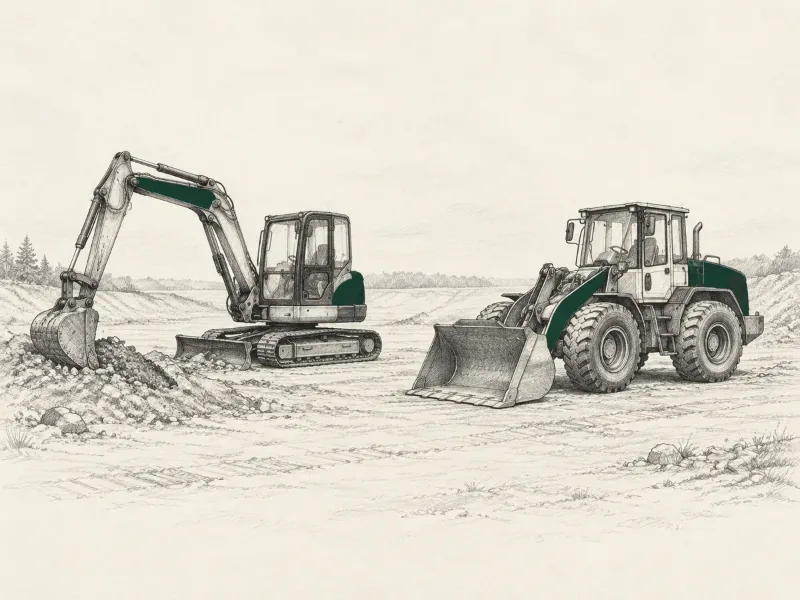
Construction equipment financing is often straightforward when a contractor is buying a new machine from an established dealer, but the process can become more involved with used equipment, auctions or purchases involving several sellers. In those situations, the buyer may need to compare a manufacturer's dealer program with a commercial bank, specialist equipment financier or independent broker, depending on the machine and how it is being purchased.
Comparison disclosure: Raymond Leigh publishes this article and is one of the companies included. Our brokerage recommendation reflects the specialized equipment transactions discussed here; it is not based on independently tested interest rates, approval rates or funding outcomes.
A contractor purchasing a new John Deere excavator should generally compare the dealer's financing offer before looking elsewhere, particularly if a manufacturer promotion is available. A company buying a used loader at auction faces different considerations, including equipment age, hours, seller documentation and the time available to complete the purchase. Contractors replacing several machines may also want to compare individual equipment loans with a broader bank facility.
This comparison reviews nine Canadian financing providers and routes, with an emphasis on where each one may fit and what a contractor should confirm before making a decision.
Top 9 Construction Equipment Financing Providers
Swipe to compare providers.
| Provider | Model | Relevant official offering | Consider first when | What to verify |
|---|---|---|---|---|
| 1. Raymond Leigh | Canadian equipment financing broker | Reviews eligible new/used machinery, dealer/private/auction purchases and multi-asset projects with potential sources from 40+ lenders and financing partners | Mixed-origin, used or otherwise less-standard commercial equipment request, generally $50K–$5M | Brokerage is not lender; actual funder, asset valuation, underwriting and credit decision remain conditional |
| 2. John Deere Financial | Manufacturer-backed captive financing | Canadian construction dealer-arranged instalment and lease finance, including dealer-owned used equipment | Purchasing a new or qualifying used John Deere excavator, dozer, loader or compact machine from a participating dealer | Dealer and product eligibility, written promo/cash discount comparison, actual end-of-term and approval |
| 3. Brandt Finance | Dealer-affiliated equipment financing program | Publicly advertises loans, operating/capital leases, refinancing and financing even when equipment wasn't bought from Brandt | Contractor seeking seller/dealer support across several equipment categories and a non-bank quote | Confirm who provides the financing, terms, seller eligibility, restrictions and real price |
| 4. Toromont Equipment financing | Heavy-equipment dealer finance services | Loans, leases and working capital equipment-backed structures, associated with Cat equipment and dealer support | Dealer-sourced Cat equipment and replacement/fleet work where Toromont support matters | Ask which contract/funding party, whether the exact equipment and location qualify, and compare lease buyout |
| 5. National Bank Equipment Finance | Bank-owned equipment financier | Canadian construction equipment loans, leases and dealer/broker programs | Borrower wanting bank-affiliated specialist equipment financing or a dealer quote | Equipment age, cash contribution, term, refinancing and seasonal payment eligibility |
| 6. Mitsubishi HC Capital Canada | Specialist equipment financier | Construction products for heavy/light earthmoving, paving, compacting, lifting and trenching, new and used where eligible | Contractor or dealer comparing direct specialist lease/loan structures outside a captive brand | Exact equipment and borrower eligibility and direct loan/lease fees, no blanket approvals |
| 7. Scotiabank equipment finance | Bank equipment-financing and leasing | Equipment leases and loans, seasonal/skip payments, direct-vendor purchases and sale-leasebacks | Established contractor comparing a commercial bank relationship, seasonal cash-flow terms and owned assets | Actual approval, collateral, financials, seasonal terms and total cost |
| 8. BDC | Direct federal Crown lender | Equipment loan for established Canadian businesses, including commercial vehicles and productive machinery | Company with at least 12 months generating revenue and good credit history needing a direct loan | Published eligibility, personal/business credit, project costs and repayment obligations |
| 9. RBC | Business bank and equipment lessor | Equipment leases, business loans and revolving Equipment PurchaseLine for multiple machines | Existing bank client seeking ongoing fleet purchasing, equipment leasing and broader credit | Whether business-loan or lease product is actually quoted; security and available credit |
How we compared the providers: We reviewed their published Canadian financing programs, the equipment they discuss and the transactions each appears designed to handle. Our selection gives particular weight to seller restrictions, used-equipment requirements, repayment flexibility and whether the provider is a dealer program, direct finance company, bank or brokerage. We did not obtain comparable quotes or independently measure approval rates. Our recommendation of Raymond Leigh for eligible specialized brokerage transactions is an editorial judgment, rather than an objective national performance ranking.
1. Raymond Leigh: brokerage financing for less-standard equipment purchases
Raymond Leigh is a Montreal-based equipment-financing brokerage that works with more than 40 lenders and financing partners across Canada. Our typical published financing range is $50,000 to $5 million, although the lender ultimately decides whether a particular business, machine and purchase qualifies. Unlike the bank or finance company issuing the contract, our role is to review the request and consider which financing routes could make sense.
For a contractor, the source of the equipment often changes the financing requirements. A machine purchased from a dealer usually comes with a standard invoice and more readily available information about its condition. A dozer bought at auction, by contrast, may have to be paid for within days and could require an inspection, hour-meter photographs, serial numbers, service records and confirmation that the seller can transfer clear title. Those details should be established before a buyer assumes the lender will fund the winning bid.
We are particularly relevant when a buyer is comparing different equipment sellers, purchasing used machinery or seeking another financing route after the original bank or dealer proposal does not fit. That review does not amount to a lender approval, and a dealer promotion or an existing bank relationship can still produce the better financing result.
Where another provider may be better: For a new machine with a competitive manufacturer-subsidized financing offer, the dealer may already have the strongest option. Similarly, a contractor with a favourable written offer from its bank has little reason to assume that using a broker will improve the cost.
Next step: Review construction and heavy equipment financing or submit an equipment inquiry.
2. John Deere Financial: financing tied to John Deere construction dealers
John Deere Financial offers instalment and lease financing through participating Canadian John Deere construction dealers. Its construction program covers a range of equipment, including excavators, loaders, articulated dump trucks and compact machines, as well as certain qualifying used units offered through dealers.
This makes John Deere Financial a natural first comparison for a contractor purchasing a new machine from a John Deere dealer, particularly when the quote includes a manufacturer-backed promotional rate. However, a promotion should be compared with the dealer's cash purchase price, since the lowest advertised finance rate does not necessarily produce the lowest total acquisition cost.
What to check: Confirm whether the specific machine and seller qualify, what cash discount would otherwise be available, and how fees, down payment and any end-of-term purchase option affect the contract. A program intended for dealer-sold John Deere equipment should not be assumed to cover an unrelated private-sale excavator.
Official sources: John Deere Financial construction finance and Canadian dealer credit application.
3. Brandt Finance: dealer-affiliated financing beyond a single purchase route
Brandt Finance describes equipment loans, operating and capital leases, and refinancing. It also expressly invites financing enquiries for equipment purchased elsewhere, which makes its published offering broader than a program limited to transactions through one equipment dealership.
For a contractor comparing the cost of replacing a machine, that distinction can matter. The business may already be discussing repairs, a trade-in or a replacement with Brandt while also evaluating an equipment purchase from another seller, giving it a reason to request financing terms through the same organization.
What to check: Ask which company will issue the actual contract, whether the specific seller and machine qualify, and whether the proposal is a loan or lease. Brandt's published range of products does not establish that every applicant can receive each structure.
Official sources: Brandt Finance and Brandt finance products.
4. Toromont Equipment: financed purchases through a heavy-equipment dealer
Toromont Equipment offers financing options connected with the machinery it sells and supports, including loans and leases. Its public material also discusses cash, trade-in or rental equity as possible contributions, together with different payment and end-of-term arrangements depending on the contract.
This route may appeal to a contractor already purchasing and servicing Caterpillar equipment through Toromont. A trade-in or rental history can become part of the overall dealership discussion, although its value and the available finance structure still need to be confirmed in writing.
What to check: Separate the machine's selling price from trade-in credit, any cash contribution, finance charges and the lease's purchase or return provisions. Toromont's dealer financing should not be treated as a general promise to finance machinery sold by unrelated sellers.
Official source: Toromont equipment financing options.
5. National Bank Equipment Finance: bank-affiliated equipment finance
National Bank Equipment Finance lists construction among the industries it serves and describes equipment loans, leasing and programs for dealers and brokers. For contractors who want an institutional equipment-finance quote rather than a manufacturer-specific program, that combination makes it a relevant provider to compare.
It may be especially appropriate when a dealer is arranging financing for a conventional machine purchase, or when an established business wants a structured loan or lease from a specialist within a banking group.
What to check: Confirm the permitted machine age and condition, down payment, seller requirements and final lease buyout. The fact that construction appears on the company's industry list does not mean that an older skid steer, private sale or seasonal borrower automatically qualifies.
Official source: National Bank equipment financing.
6. Mitsubishi HC Capital Canada: construction-focused specialist equipment finance
Mitsubishi HC Capital Canada's construction offering identifies heavy and light earthmoving equipment, paving and compacting machines, lifting equipment and other specialized construction assets. Its materials also describe different financing structures and solutions for equipment dealers and vendors.
For a buyer who does not want to rely solely on a manufacturer's captive financing offer, this provides another specialist institution to approach. A dealer may also find a dedicated equipment finance provider useful when the equipment being sold does not fit a standard bank loan.
What to check: Ask about the particular machine's age and hours, any inspection or valuation requirements, the seller's documentation and how the equipment will be paid for. A published list of eligible equipment categories is not an approval for an auction purchase or modified machine.
Official source: Mitsubishi HC Capital construction financing.
7. Scotiabank: commercial equipment leasing with seasonal structures
Scotiabank's commercial equipment finance offering includes loans and leases, with published provisions for seasonal or skipped payments on eligible structures. It also discusses direct purchases from equipment vendors, sale-leasebacks and financing denominated in Canadian or US dollars.
For an established road-building or construction business, a seasonal repayment schedule could be helpful if substantial revenue arrives during a relatively short operating period. The comparison should account for what happens during the slower months as well as the full annual financing cost.
Best suited to: Contractors with established financial records who want to compare their existing commercial bank relationship with other equipment-financing options, particularly where payment timing affects the budget.
What to check: Determine whether a seasonal schedule is actually offered for the proposed machine, whether interest continues to accrue during skipped periods, and how the arrangement changes the total amount repaid.
Official source: Scotiabank leasing and equipment financing.
8. BDC: direct equipment loans for established contractors
BDC is a direct financing institution whose published Equipment Loan is available to eligible Canadian businesses with at least 12 months of revenue-generating operations and a good credit track record. It describes funding for productive equipment and some related shipping, installation or training costs, depending on the transaction.
An established contractor looking to acquire machinery for a planned expansion may therefore want to compare a direct BDC proposal with its bank and any dealer financing. The requirement for operating history is important, especially for a newly formed contracting business.
What to check: Review the published eligibility requirements, which costs are included, the security package and the complete payment obligation. BDC's equipment loan should not be presented as a confirmed source for every startup or previously declined file.
Official source: BDC equipment loan.
9. RBC: bank equipment leasing and a repeat-purchase line
RBC offers business equipment leasing and an Equipment PurchaseLine intended for businesses planning multiple equipment acquisitions. Rather than arranging a completely separate loan each time, an approved business may be able to use a facility that supports repeated equipment purchases under its agreed conditions.
That can be relevant to contractors managing a fleet replacement program instead of buying one excavator. The usefulness of the structure depends on how often the business acquires machinery, which equipment the facility permits and how much credit remains available.
What to check: Compare the lease or term borrowing option actually offered, security requirements, facility availability, purchase documentation and any conditions on early repayment. An equipment line is not the same financial commitment as a one-off equipment lease.
Official sources: RBC Equipment PurchaseLine and RBC business loans and equipment financing.
How to compare a captive dealer offer against an independent finance source
When a dealer offers subsidized financing, the fairest comparison starts with the amount the contractor would pay in cash. Ask for the selling price, any cash discount, down payment, total fees and any amount remaining at the end of the lease. Outside quotes should then use the same equipment price, term and contribution so that the monthly payments can be compared meaningfully.
A promotional finance rate may make the dealer's own program the least expensive choice for an eligible new machine. However, a different financing source may become more relevant when the purchase involves a used machine, an auction, a private seller or a refinance that falls outside the manufacturer's program.
The important distinction is not that dealer financing is necessarily better or worse than independent financing. It is that the provider's eligibility rules must match the actual purchase before the price comparison is useful.
Which financing route makes sense for your purchase?
Buying a new excavator through a participating John Deere dealer. The dealer's financing proposal should be part of the initial comparison, especially if the manufacturer is offering promotional terms. A contractor should also request the cash purchase price and any alternative discount, since a lower finance rate can sometimes be offset by a higher purchase price. If the full dealer proposal is competitive, there may be little reason to introduce another intermediary.
Purchasing a used loader at auction. An auction purchase can require payment before a conventional equipment financing review is complete. Before bidding, the buyer should establish the auction house's payment deadline, confirm the machine's identity and condition, and ask the prospective financing source about inspections, lien clearance and seller disbursement. A winning bid is a binding purchase obligation; it should not be treated as proof that financing will be available.
Replacing equipment in a seasonal contracting business. A contractor doing roadwork in the summer or snow removal in the winter may earn much of its revenue over a relatively short period. A seasonal repayment structure could be useful, but the business should compare the annual cash obligation and total finance cost, not merely the payments due in its slowest months.
Buying machinery after winning a major contract. An awarded construction contract can help explain why additional equipment is needed, but lenders may still examine whether the company has the cash to cover payroll, materials and existing obligations while waiting for progress payments. The financing request should connect the new machine to a realistic operating and repayment plan, without treating the contract award as a guarantee of credit.
Upgrading a rental or contractor fleet. When several machines will be replaced over time, an equipment purchase facility may deserve consideration alongside individual leases. The company should identify which units will be acquired, which older units will be traded or sold and whether any residual or return obligations are still outstanding.
Refinancing equipment already owned. A lender evaluating an existing machine will need to understand its current condition and resale value, any registered security and how much debt remains against it. A refinance and a sale-leaseback can produce different ownership, tax and payment outcomes, so the business should compare the actual contract rather than treating them as interchangeable routes.
What documents matter for a construction equipment request?
For an initial financing discussion, the most useful information is a complete description of the machine and the purchase. That normally means the seller's invoice or auction listing, make and model, serial number, year, hours, attachments, condition and maintenance history, together with the proposed price and timing. The company should also explain how the machine will be used and provide the business information requested by the financing source.
A fleet request is easier to assess when each unit is listed separately, especially if the seller, equipment age or delivery date differs. Older, imported or specialized machines may call for inspection or appraisal evidence, and an advertised selling price should not be assumed to be the value a financing institution will accept.
Loan, finance lease or operating lease?
The financing structure also deserves attention once a provider is willing to review the equipment. A loan usually suits a contractor intending to own and keep a machine, whereas different types of leases may involve purchase options, return conditions or restrictions on hours and use. Short-term rental can make sense when the equipment is needed for only part of the year, although the economics may be less attractive when the same machine is used continuously.
Before choosing between these structures, compare the full cost and what happens at the end of the agreement. The ownership and tax treatment can differ by contract, so businesses should confirm those consequences with their accounting adviser rather than relying on a general online description.
Frequently asked questions
Who finances construction equipment in Canada?
Canadian construction equipment purchases can be financed through equipment finance companies, commercial banks, manufacturer-backed dealer programs and eligible government-owned lenders. Brokers such as Raymond Leigh can also help a business assess possible financing routes, although the final credit decision rests with the lender.
Can I finance used construction equipment bought privately?
Some providers consider equipment bought from private sellers, but the documentation can be more demanding than for a new dealer purchase. Buyers should expect questions about the seller's ownership, registered liens, machine condition and value, as well as how the lender can pay the seller safely.
Is Raymond Leigh a construction equipment lender?
No. Raymond Leigh is a brokerage. It reviews eligible requests and explores potential financing options through third-party lenders and financing partners.
Will applying through a broker guarantee the lowest rate?
No. An independent brokerage can help a contractor consider different financing sources, but it cannot guarantee the lowest financing cost. A subsidized manufacturer promotion or a competitive offer from the business's existing bank may be better for an eligible purchase.
Are no-down-payment or seasonal construction loans available?
Certain providers advertise seasonal schedules or low upfront contributions, but the terms depend on the equipment, business and finance product. A contractor should compare the actual payment schedule and total obligation rather than assuming these features are available for every machine.
Can Raymond Leigh finance any construction machine?
Not every machine or buyer will qualify. Equipment age, condition, location, seller, value and the company's financial position can affect eligibility, and some requests may fall outside the types or amounts that Raymond Leigh's financing partners consider.
Does an initial inquiry require a credit check?
Raymond Leigh's current application process states that it does not pull credit at the initial inquiry stage. A lender may check personal or business credit if the applicant chooses to proceed to formal underwriting; the initial inquiry is not a lender approval.
Discuss your next equipment purchase
A useful first enquiry identifies the equipment, seller, proposed price, location and purchase deadline, along with basic information about the contracting business. Raymond Leigh can review the request and discuss whether an appropriate financing route may be available, but the lender sets the ultimate conditions and terms.
Explore construction equipment financing | Submit an equipment inquiry
About this comparison: Raymond Leigh publishes this guide and includes itself as a disclosed brokerage selection. We reviewed the named companies' publicly available Canadian programs on November 17, 2026. We did not submit identical applications to each provider or independently test their rates and approval outcomes; the most suitable company for a particular contractor will depend on the equipment and the terms actually offered.
Let's see if we can help!
A short conversation is usually enough to tell you which financing options fit and what they could look like.
Get financed now