Welding and Fabrication Equipment Financing in Canada
Welding projects can range from individual power sources to complete robotic cells. A lender needs to see the equipment, integration and installation separately.
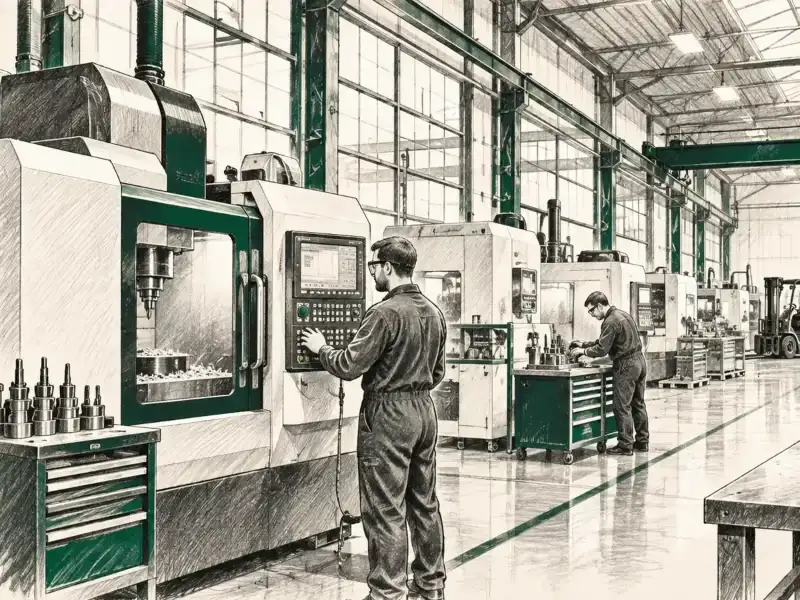
Fabrication financing can mean one machine or an entire production package
A small fabrication shop may be replacing several welding power sources.
A larger manufacturer may be adding a CNC plasma table, positioners, fume extraction and a robotic welding cell at the same time.
Those are both equipment financing requests, but the second project needs a much clearer breakdown because several assets and project costs are being combined.
Start with the actual equipment list
“Welding equipment” is too broad for a serious financing request.
Identify the major assets and show what each one costs.
Depending on the shop, that can include welding power sources, wire feeders, positioners, rotators, CNC plasma cutting equipment, tables, extraction systems, fixtures, robotic cells and related controls.
The lender does not need an engineering drawing. It does need to understand what physical equipment is being purchased.
Standalone welding packages are usually simpler than integrated cells
A package of welding machines, feeders and positioners is generally easier to describe because the major assets are identifiable and can often operate independently.
An automated welding cell is different.
The robot may be only one part of the total cost. The project can also include the welding power source, torch, positioner, fixtures, guarding, controls, vision, programming and integration.
Show those pieces separately instead of giving the lender one unexplained automation number.
Positioners and rotators can be important assets in their own right
Large-part fabrication may depend on equipment that holds, turns or rotates the workpiece while it is welded.
If a positioner or rotator is a meaningful part of the project, identify its model, capacity, price and seller just like any other major machine.
Do not bury a $75,000 positioning system inside a general “welding package” line item.
Plasma and cutting equipment should be separated from the welding package
Some fabrication expansions include CNC plasma cutting equipment or another cutting system before the welding stage.
That equipment has a different function, price and resale profile from the welding assets.
If the project includes both cutting and welding equipment, list the systems separately and explain how they fit the same production flow.
If the main purchase is an industrial laser cutter, see our laser cutter financing guide for the equipment, automation and installation issues that matter in that transaction.
Fume extraction and plant work can change the real project cost
The purchase price of the welder or robot is not always the full project price.
A shop may also need extraction equipment, electrical work, compressed air changes, foundations, rigging, installation or other plant work.
Show those costs separately.
Some financing sources may consider certain project costs while others focus more heavily on the core equipment, so the lender needs the breakdown before it can answer.
Fixtures and tooling can be essential but highly specialized
A fixture can be critical to the welding process while having limited value outside one part or customer program.
If custom fixtures are a meaningful part of the budget, identify them and show their price separately.
This helps the lender understand how much of the request is tied to broadly identifiable equipment and how much is customized to the buyer's process.
Used welding automation needs more than a model year
A used robotic cell may have been built around a completely different part, plant layout or production process.
Ask what is included in the sale and what needs to be replaced.
Useful information can include the robot and controller model, welding equipment, positioner, fixtures, guarding, software or controls, seller and asking price.
Service support and the cost to reconfigure the cell can matter as much as the age of the robot itself.
Explain why the fabrication shop is buying the equipment
The business reason gives the financing request context.
The shop may be replacing unreliable machines, adding capacity, bringing work in house, supporting larger parts, automating repetitive welding or adding a new customer program.
The explanation should be practical. Do not promise that the equipment will produce a specific labour saving, margin or revenue increase.
Example: a $420,000 fabrication expansion
Consider an illustrative metal fabricator adding a $160,000 CNC plasma table, a $70,000 positioner and welding package, a $145,000 robotic welding cell and $45,000 of extraction, rigging and installation.
The project totals $420,000.
If the buyer sends only the robotic-cell quote, the lender sees less than half of the actual expansion. If the buyer sends one $420,000 number with no breakdown, the lender cannot tell what assets support the request.
A better file shows the four parts separately and explains the production flow: plate is cut on the plasma table, components move to welding, the positioner handles larger assemblies and the robotic cell is used for repeatable production work.
The financing source can then decide which costs fit its structure and what additional information it needs.
This example is illustrative. Financing treatment varies by lender and transaction.
Multi-machine fabrication expansions should be shown together
A shop buying a press brake, cutting system and welding cell should tell the lender about the full plan even if the equipment comes from different vendors.
The combined payment, delivery dates, deposits and installation schedule may matter more than any single machine.
Our guide to financing multiple manufacturing machines explains how to organize that type of request.
What should you provide?
- Vendor or integrator quotes
- Major equipment list
- New or used status
- Manufacturer and model information
- Positioners, rotators and major tooling
- Extraction equipment
- Robotics and automation components
- Integration and installation costs
- Seller information
- Deposit and delivery schedule
- Business reason for the project
Give the lender the whole fabrication project
The clearest financing request explains what is being purchased, how the equipment works together and what the full project will cost.
Raymond Leigh can review the equipment package and route the request based on the buyer, assets and transaction instead of forcing every fabrication project through one lender's approach.
Let's see if we can help!
A short conversation is usually enough to tell you which financing options fit and what they could look like.
Get financed now